ABOUT US
The story behind Black Health Intelligence — from clinical practice to innovation lab.
About Justin Black
Nurse Practitioner & Health-Tech Founder
Engineer & Architect of All Systems: clinical, human, and above all AI and tech
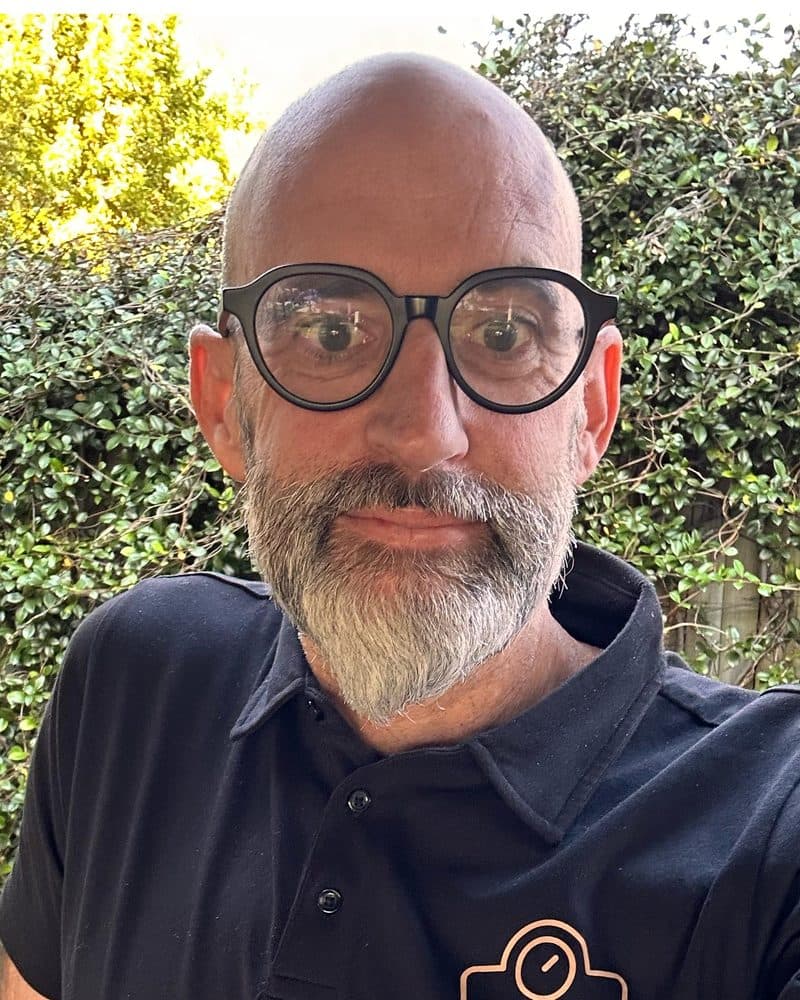
Justin Black is an AHPRA-endorsed Nurse Practitioner with formal qualifications in Nurse Practitioner practice, intensive care, emergency/acute care, paediatrics, radiology interpretation, obesity medicine, and health promotion. His clinical work is grounded in safe, evidence-based practice and more than two decades of experience across Australia.
Formal Education
Qualifications Only
- ▸Master of Nursing Science (Nurse Practitioner) — QUT
- ▸Postgraduate Certificate of Nursing Science (Intensive Care) — JCU
- ▸Graduate Certificate of Health Promotion — ECU
- ▸Bachelor of Science (Nursing) — Curtin University
Extensive professional development in obesity management, emergency, paediatrics, ALS/PALS, disaster response, radiology interpretation, dermatology, simulation, prescribing, and clinical leadership. These qualifications determine Justin's regulated scope of practice under AHPRA and the NMBA.
Credentials
- ▸Nurse Practitioner degree awarded 2011; AHPRA-endorsed Nurse Practitioner since 2011.
- ▸Intensive Care certificate 2006: ACCCN North Queensland prize for the highest GPA.
- ▸Health Promotion certificate 2005, taken because so much of the illness I treated in remote communities was preventable.
- ▸AUSMAT (internationally deployable), EMERGO Senior Instructor, MIMMS, ALS, PALS, STABLE, AusSETT simulation train-the-trainer.
- ▸Chapter editor, Weber and Kelley Health Assessment in Nursing, 4th edition (Lippincott Williams & Wilkins, 2011).
- ▸Director, Black Health Intelligence Pty Ltd, ABN 23 693 026 112.
Professional Experience
Separate to Qualifications
Justin has 25+ years of clinical experience across:
He has provided care in hospitals, GP clinics, urgent care, community settings, and modern telehealth models. His approach combines physiology, empathy, accountability, and long-term thinking—especially in obesity care, where weight regain is biological, not personal failure.
I'm a health systems architect. I've run clinical units, rebuilt clinical governance at national scale, taken a 100+ practitioner telehealth service through NSQHS accreditation in 12 months, and designed and shipped my own regulated health software and clinical business.
Leadership
- 2024–nowOwner and Clinical Director, Downscale Weight Loss ClinicGovernance-led telehealth clinic with a team of Nurse Practitioners
- 2023–2024Co-Clinical Director, national private telehealth service100+ practitioners, about 30,000 patients, accreditation
- 2015–2017Nurse Unit Manager, Redcliffe Hospital EDRunning a major emergency department
- 2014–2018Clinical Nurse, Redcliffe EDResus and shift coordination, disaster and paediatric portfolios
- 2012–2014Cardiovascular and Thoracic Services Manager, Holy Spirit Northside30-bed cardiology ward, 30-bed cardiothoracic ward, outpatient cardiac rehabilitation
- 2011–2012ICU Education Coordinator, Mater Education CentreICU workforce education
- 2008–2009Nurse Unit Manager, John Flynn Private Hospital12-bed cardiothoracic ICU
- 2005–2007Acting NUM and acting Organ Donation Coordinator, Cairns Base HospitalICU leadership and donation pathways
Disaster and incident command: AUSMAT-trained and internationally deployable; I deployed to Samoa during the 2019 measles outbreak. EMERGO Senior Instructor, MIMMS-trained, and facilitator of hospital disaster exercises.
Readiness under pressure · Cairns ICU, 4 September 2006
On the day Steve Irwin was fatally injured off Port Douglas, I was in charge of the Cairns Base Hospital ICU. My job was to prepare and clear a single space in the unit. That meant knowing the whole unit in real time: every patient, every bed, every staff member, and what each move would do to everyone else. It's the same thinking I apply to every system: know the whole thing, see the risk, and be ready before you're needed.
Career to capability
- 2024–nowFounder: Downscale and Black Health IntelligenceEnd-to-end architecture: service design, governance, data, software and AI
- 2023–2024National telehealth governance and accreditationDesigning assurance systems at scale and defending them to a regulator
- 2021–nowGeneral practice, urgent care, virtual paediatric ED, telehealthHow care breaks across settings and through remote models
- 2018–2022Queensland Children's Hospital EDTriage and flow under pressure in a complex tertiary ED
- 2014–2018Redcliffe ED, including as NUMUnit operations, workforce, disaster and paediatric portfolios
- 2012–2014Cardiac and thoracic services managementRunning multiple wards and an outpatient program
- 2005–2012ICU in Cairns, John Flynn, Albany and the MaterHigh-acuity systems, unit management, workforce education, and formal lean thinking training
- 1999–2004Rural and remote WA, NT and QLDSafe systems with thin resources and long transfers; prompted my Health Promotion qualification
Places I've worked
Downscale Weight Loss Clinic
Who We Are & What We Solve
Downscale was built as a small, family-run clinic deliberately designed to be the opposite of high-volume, impersonal weight-loss services.
The Problem We Solve
Australian weight-loss care is often rushed, transactional, and overly focused on short-term outcomes. Many clinics don't acknowledge that weight regain is normal human physiology — not a moral failing. This leaves patients unsupported and trapped in a cycle they blame themselves for.
Our Approach — The Four Pillars
1. Clinical & Medication Support
Safer prescribing, close follow-up, side effect management, and realistic expectations.
2. Nutrition
Protein-forward, simple, sustainable eating that works with human physiology.
3. Activity
Muscle-first, realistic, non-intimidating, and tailored for everyday life.
4. Mental Health & Sleep
Stress, shame, poor sleep and burnout derail weight loss—so we address them, without judgement.
This model reflects Justin's clinical expertise and the couple's commitment to genuinely personalised care.
About Bec
RN, Co-Founder & Patient Experience Lead
Clinical Nurse Consultant · Practice Manager · Social Media Expert
Bec is an experienced Registered Nurse with a background in:
She handles patient experience, education, content, and the "human side" of every product the couple builds. Bec ensures everything—clinical, technical, or creative—feels accessible, kind, and supportive.
Together, Justin and Bec run a modern health clinic while raising five children and building a growing portfolio of problem-solving tech projects.
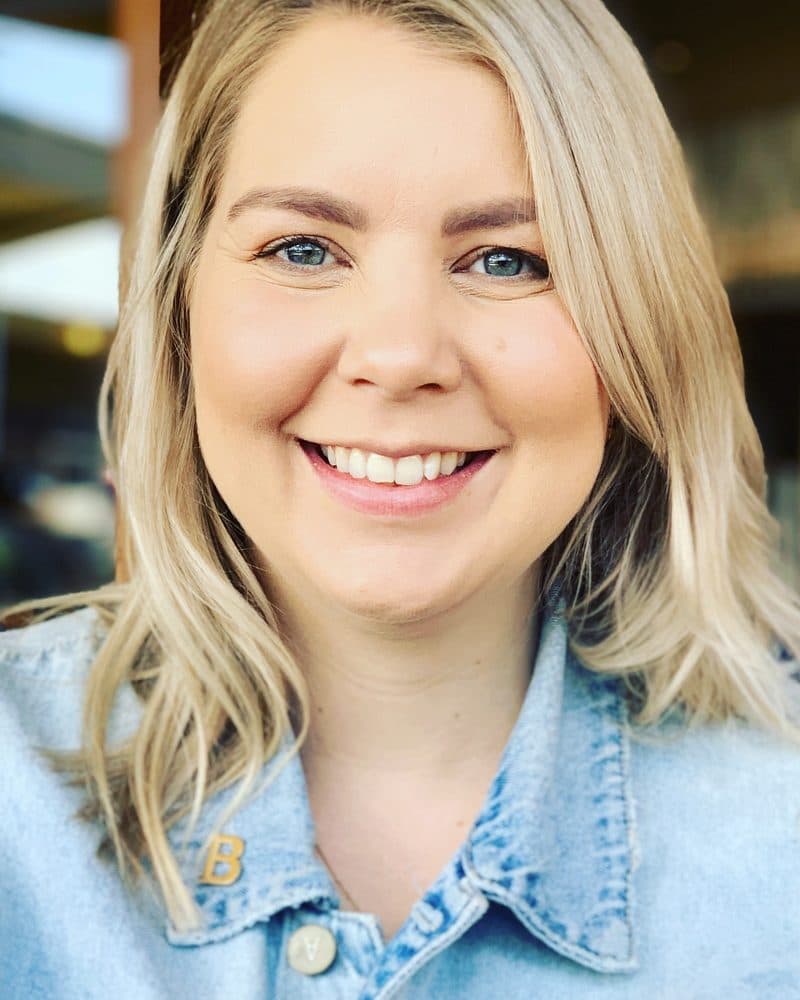
Bec is my wife, business partner and co-founder. If I'm the system half of what we build, Bec is the human half. She's the reason our work reads well, looks right and connects with people, and that it stays within the rules while doing it.
Clinical grounding
Bec is a Registered Nurse with experience in emergency, coronary care, weight management, patient education and clinical support. She knows what patients actually need to hear, because she has cared for them.
Design
Bec is skilled across every part of design: brand, social media, websites, patient education materials and campaign creative. She makes sure everything we put out, clinical, technical or creative, is clear, accessible and kind.
Social media and engagement
Bec runs our social media, content and health communication. She builds audiences and communities that trust us, and handles the human conversations behind every brand.
Patient experience and practice management
Bec is Practice Manager and Patient Experience Lead at Downscale, responsible for how patients feel at every step, from the first post they see to the follow-up after their consult.
Health guardrails
In health marketing, a single wrong post is a regulatory event. Bec has years of hands-on knowledge of Australian healthcare advertising and engagement rules, and she makes sure ours never are.
- ▸Ahpra's advertising guidelines for health services
- ▸The TGA's rules on advertising therapeutic goods
- ▸What can and can't be said to patients online
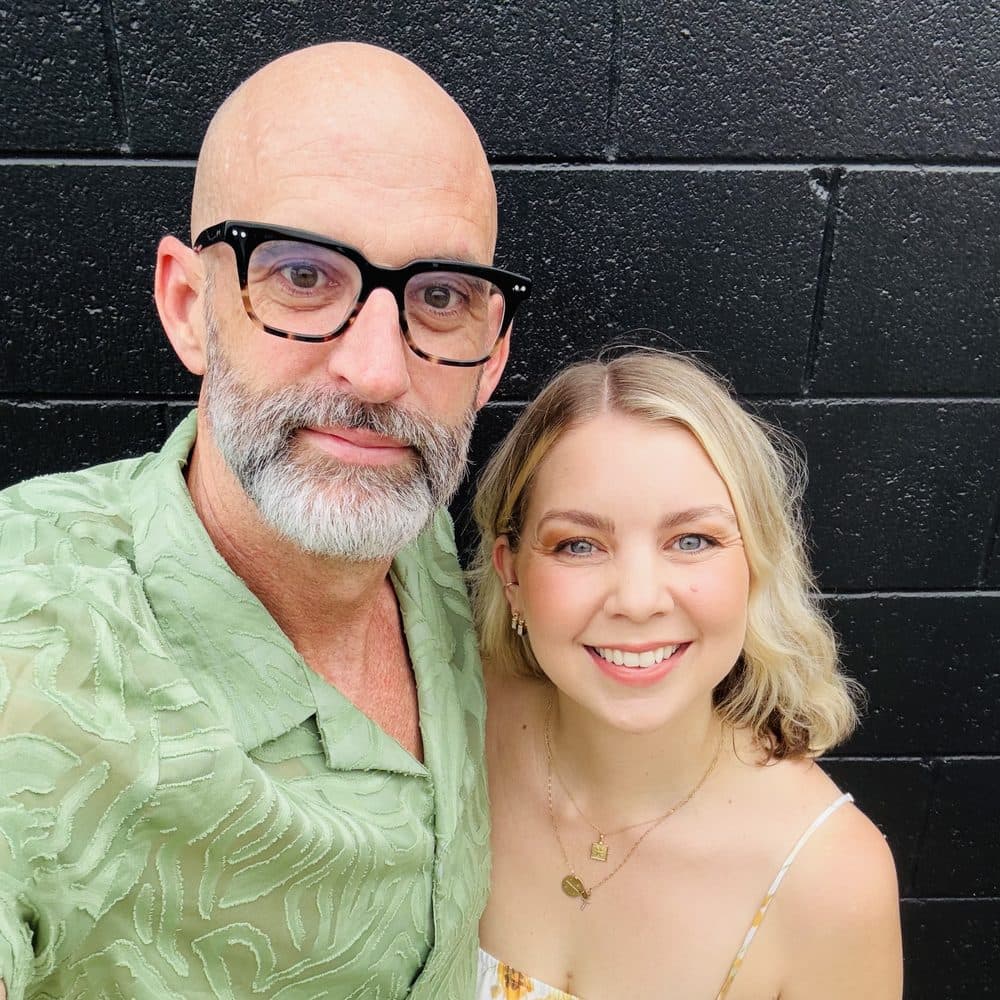
I design how a service works: the system, the governance, the risk controls and the outcome. Bec makes sure people want to use it, understand it and are spoken to safely and lawfully. That combination of clinical, systems, design and regulatory skill sits under one roof at Black Health Intelligence.
The Eclectic Skillset
What Makes Us Different
Between Justin's clinical background and Bec's patient-experience, communication, and design expertise, we bring one of the most eclectic and effective skillsets in the health-tech space.
Our Philosophy
"We don't work around problems — we build the solution."
- ▸If a barrier exists, we design the tool that removes it.
- ▸If a process is broken, we fix it instead of tolerating it.
- ▸If patients are confused, overwhelmed, or unsupported, we build clarity and structure.
We are constantly building, exploring, questioning, testing, and creating — both inside healthcare and outside it. Because sometimes the best ideas come from the things you obsess over in real life.
Justin's systems engineering
I turn regulation into system structure. In my platforms, compliance isn't a policy sitting beside the code. It's enforced at the points where data or content leaves the system, and pinned by tests that fail the build if anyone bypasses it. I used the same pattern in accreditation, where every policy was backed by audit tools, risk registers and my personal audit of every clinician.
How I think
Every system I work on starts with one question: what is the core outcome this business exists to deliver? For a clinic, that's safe, effective care patients trust and come back for. Everything else either serves that outcome or gets in its way.
1. Define the real problem
I go past the symptom everyone is reacting to and find the cause underneath it.
2. See the whole system
I map how work, information, decisions and money actually flow between people, policies and software.
3. Remove the waste
I cut steps, handovers, double entry, waiting and rework that add nothing to the core outcome.
4. See the risk and negate it
I look at where the system could harm a patient, breach a rule or fail silently, then design the control into the system so it can't happen.
5. Govern it
Every decision gets a clear owner, the rules hold under pressure, and a human stays in the loop where judgement matters.
6. Add value to the core outcome
I build only what moves the outcome, measure it and improve it in PDSA cycles.
Lean-trained in Albany, in the Great Southern region of WA, on the methods Toyota and Boeing use to strip out waste and build quality into the process itself.
Capability
Rated on what I can show, not claim. Practised: I've done it. Led: I've run it for others. Designed: I built the system other people run.
- ▸Clinical governance · Designed. Built a full governance system from scratch for 100+ practitioners and ~30,000 patients.
- ▸Accreditation · Led. NSQHS Primary and Community Healthcare Standards, achieved in 12 months; evidence presented and defended to the Australian Commission on Safety and Quality in Health Care.
- ▸Systems architecture · Designed. Ten ventures architected end to end: data models, compliance controls, workflows, AI layers.
- ▸Systems analysis · Designed. Diagnosed and fixed failure points in my own platforms, for example two publishing paths that disagreed, and memories stored without vectors.
- ▸Regulatory and compliance design · Designed. AHPRA/TGA gates enforced at system exits, Medicare eligibility logic, Australian data-residency design.
- ▸AI architecture and safety · Designed. Multi-agent system with a tiered model-routing ladder, compliance review on the top-tier model, and evidence-of-work rules for agents.
- ▸Clinical operations · Led. NUM of Redcliffe ED, NUM of a 12-bed cardiothoracic ICU, manager of 60 cardiac beds plus cardiac rehabilitation.
- ▸Risk, incident and disaster systems · Led. AUSMAT deployment to Samoa, EMERGO Senior Instructor, MIMMS, ED disaster portfolio.
- ▸Education and workforce systems · Designed. ICU Education Coordinator, simulation train-the-trainer, built a clinician onboarding and education platform.
- ▸Clinical practice · Practised. 25+ years, endorsed NP since 2011, currently practising in telehealth, virtual paediatric ED and general practice.
Architecture patterns
- ▸One door for every high-risk action. In Not Real Smart, every post that reaches a live social account goes through a single dispatcher. I introduced it after finding that "Schedule" and "Publish now" took two different routes and could land on two different accounts. Drafts and media processing each have exactly one function that may write them, and every other path is refused.
- ▸Controls at the exits, not in the callers. Compliance checks sit where content leaves the system, a publish gate and a save gate, so a new feature cannot forget to call them. A regulatory-invariants test scans the whole codebase for any route to a live account that skips the gate, and fails the build if it finds one.
- ▸Third parties behind my own interfaces. Publishing vendors sit behind my dispatcher as swappable transports. Brand intelligence, the compliance gate, scheduling and memory stay in my own code. I documented this as a written architecture decision.
- ▸Measured, not assumed. I tested a vendor's multi-tenant filter against the live account, found it was ignored, and moved customer isolation into my own code, pinned by a test.
Failures found and fixed
- ▸Posts landing on two different social accounts. Cause: the routing decision lived in two places that disagreed. Fix: one dispatcher for every publish path.
- ▸Compliance could be bypassed. Cause: the check lived in one caller, not at the exit. Fix: publish and save gates at the exits, plus a test that fails the build on any bypass.
- ▸Thousands of AI memories that could never be recalled. Cause: the embedding client needed a key that was never set, so it failed silently. Fix: embeddings routed through the gateway, with the vector width enforced as a contract.
- ▸Failed content shaping future content. Cause: the outputs library fed every department, including rejected drafts. Fix: a save gate, so content that failed review is never stored.
- ▸Customer data isolation assumed from a vendor. Cause: the vendor's filter was ignored, confirmed by testing it live. Fix: isolation enforced in my own code and pinned by a test.
- ▸Downscale exposed by the NP telehealth rule change from 1 November 2025. Cause: a 12-month in-person relationship requirement, with a disaster-area exemption. Fix: built TeleCheck to verify eligibility in real time.
Clinical governance and accreditation
As Co-Clinical Director of a large national private telehealth service (2023–2024), I took the service through accreditation against the NSQHS Primary and Community Healthcare Standards in 12 months. The service covered 100+ practitioners and around 30,000 patients. I researched, drafted, presented and defended the evidence to the Australian Commission on Safety and Quality in Health Care.
- ▸Governance structure: a Clinical Governance Committee and its reporting lines.
- ▸Policy framework: medication safety, prescribing compliance, infection control, incident management, open disclosure and clinical records.
- ▸Risk system: risk registers, incident reporting and audit tools.
- ▸Workforce assurance: a clinician onboarding and education platform, with authored policies and video training, followed by a personal audit of 100+ clinicians.
- ▸Quality improvement: PDSA cycles and structured consumer feedback.
- ▸Consumer rights: consent redesigned to the Australian Charter of Healthcare Rights.
- ▸Continuity: emergency and business continuity plans.
Why this matters for the AI era: the ACSQHC is the same body that writes Australia's clinical AI guidance. I've already built, by hand and at scale, the readiness and assurance layer that health services now need for AI. I'm now productising it as Abe AI, an AI-readiness and clinical governance platform.
Regulation, built in
- ▸AHPRA and TGA advertising law: A compliance review gate that every publish and save path must pass, run on the top-tier AI model by design, because a few cents per draft costs far less than a breach.
- ▸Medicare telehealth rules, including the NP established-relationship requirement from 1 November 2025: TeleCheck verifies eligibility and disaster-area exemptions in real time.
- ▸Medicare assignment-of-benefit requirements from 1 July 2026: Consent and billing workflow designed for the transition period and for the stricter rules after it.
- ▸Australian data residency for health information: TeleScribe's transcription and language-model layers designed to stay onshore.
- ▸NSQHS standards and the Charter of Healthcare Rights: A full governance and consent system, accredited.
- ▸Prescribing governance in high-audit areas: Prescribing standards and audit readiness built into Downscale.
- ▸NMBA Nurse Practitioner endorsement requirements: EndorseMe structures the evidence pathway around the NP standards.
AI architecture and safety
- ▸Orchestration. One AI Director delegates to 14 departments. Each runs as an independent agent with its own model, memory namespace, tools, budget and audit row. Step limits, concurrency caps and spend checks run before every call.
- ▸Evidence, not claims. An agent must return evidence that a tool actually ran during the turn, not just a statement that it did.
- ▸Tiered model routing. One source of truth for every model choice, with fast, agency, frontier and code tiers and explicit fallback chains. High-risk tasks, such as compliance review, are routed to the frontier tier by design.
- ▸Memory with contracts. Semantic memory uses a fixed vector width, deduplicates near-identical facts and is scoped per brand and per department. Users can browse, export and delete it.
- ▸Safe external access. MCP access is an allowlist. External AI clients can call only reviewed tools and otherwise act as messengers to the Director. Access uses OAuth 2.0 with PKCE.
- ▸Governed knowledge. Sniffopotamus and the perfumery tooling cite their sources and say plainly when the evidence is silent, rather than invent an answer.
- ▸Readiness for others. Abe AI applies the same principles to health businesses: assess, answer and generate the governance needed to use AI safely as regulation changes.
Where I can help
- ▸AI readiness and governance for health services. An AI governance framework, risk register, policies and human-in-the-loop design, aligned to NSQHS and Commission guidance.
- ▸Accreditation preparation. Gap analysis against the relevant standards, governance structure, evidence packs and audit tools.
- ▸Clinical safety review of health software. Review of workflows, failure points, escalation paths and compliance controls before launch.
- ▸Health platform architecture. Service design through to data model, compliance gates and the AI layer.
- ▸Telehealth and Medicare compliance. Eligibility logic, consent and billing workflows, prescribing governance.
- ▸Advisory and board roles. A clinical governance lead or Chief Clinical/AI Officer perspective for health technology companies and investors.
Bookings run through Not Real Smart, our consulting business. Not real: artificial. Smart: intelligence.
Why We Build Beyond Health
Alongside Downscale and our clinical platforms, we also create non-health SaaS products based on our passions, hobbies, and money-eating obsessions, including:
ScentSwap
Australia's first AI-powered fragrance bartering marketplace.
For perfume lovers who want to trade safely, fairly, and without scammers.
These side projects exist because creativity doesn't fit neatly into one industry—we follow the ideas worth building.
Black Health Intelligence Pty Ltd
This is our umbrella company for:
Our Mission
To make healthcare more personal, intelligent, and human—while also building tools that reflect our actual lives, passions, and obsessions.
Our Invite
Follow along for this skilled, eclectic, fast-moving building journey.
And if you're brave enough?